


A NOTE About this episode: When it was originally taped Peter Klym was not a candidate running against Adrian Brown. A different candidate had filed, but then subsequently withdrew. When this episode was taped there was a reference to the candidate that subsequently withdrew - not Peter Klym. That reference has been edited out of the episode in order to minimize any potential confusion.
Whether you’ve experienced Oregon’s criminal justice system firsthand, worked inside it, or just watched it from the outside wondering how any of it actually works — this episode is for you.
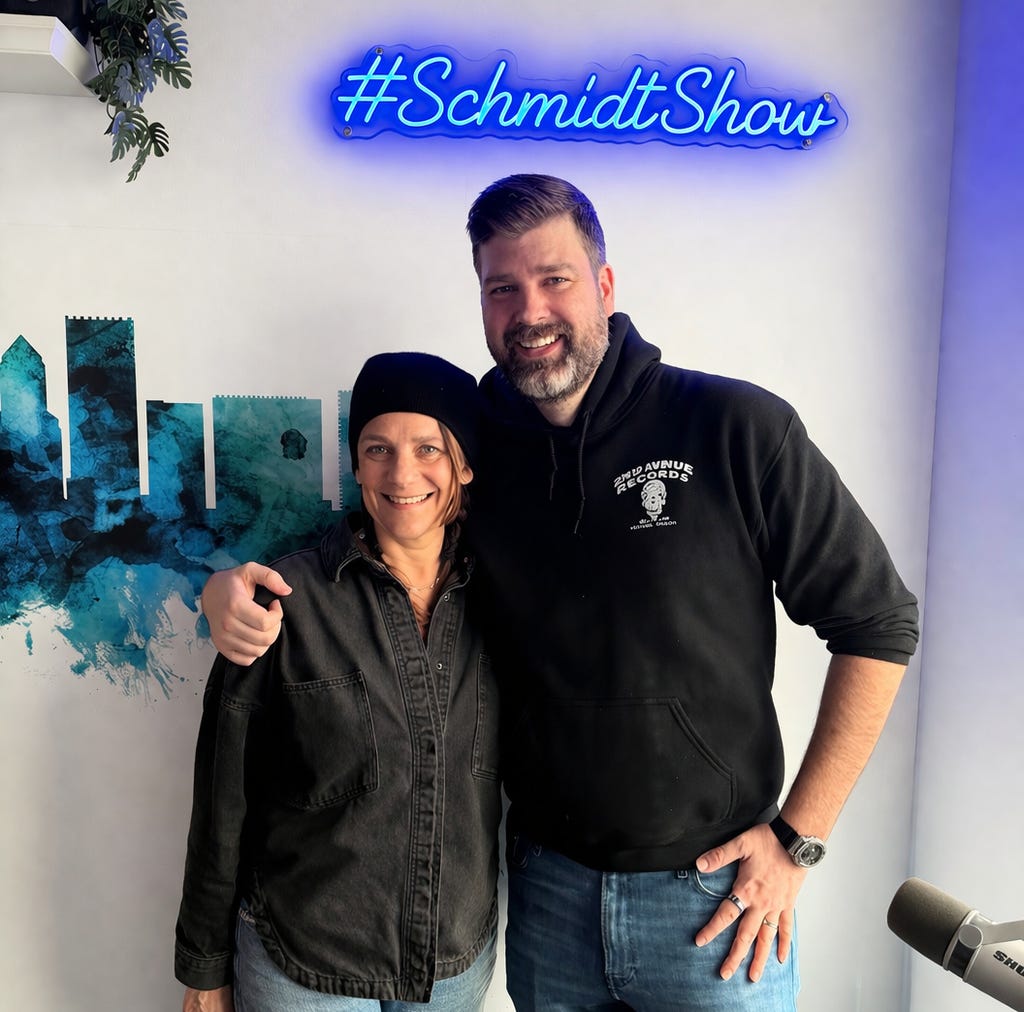
This week on the SchmidtShow PDX, I sat down with Professor Aliza Kaplan — Director of the Criminal Justice Reform Clinic at Lewis & Clark Law School, co-founder of the Oregon Innocence Project, and one of the most consequential criminal justice voices in this state — to dig into a system under serious strain. We’re talking about a constitutional crisis, judicial races in a primary most voters will skip, and a local power struggle that raises some uncomfortable questions about who’s really in charge of justice in Multnomah County.
We covered a lot of ground. And I want to give you the full picture before you listen, because this stuff matters — and it’s more connected than it might look at first glance.
The Right to a Lawyer. It’s Not Optional.
In February of this year, the Oregon Supreme Court handed down a unanimous ruling in State v. Roberts. The holding was simple: if the state fails to provide you with a court-appointed attorney within 60 days on a misdemeanor or 90 days on a felony, your charges must be dismissed.
The case traces back to a Multnomah County man named Allen Rex Roberts, charged with driving a stolen vehicle in 2021. His case was dismissed in 2022 — no public defender available. Prosecutors refiled in 2024. Dismissed again — still no lawyer. The Supreme Court said, plainly: this is a constitutional violation. Oregon violated his right to counsel.
The fallout from the ruling was enormous. More than 1,465 criminal cases statewide became eligible for dismissal. Over 900 of them were here in Multnomah County. The charges weren’t all minor — drug trafficking, weapons offenses, felony DUII, strangulation. By late February, the DA’s office had reviewed roughly 772 cases and dismissed 623 of them.
Here’s what I want you to sit with: prosecutors have known about this crisis for years. They’ve watched the unrepresented docket grow. They’ve continued filing cases — bragging very recently in fact, about how many cases they charge — while fully aware that a significant percentage of those defendants had no lawyer waiting for them. You don’t get to hold the fire extinguisher behind your back and then cry fire in the theater. The Supreme Court didn’t create this problem. They just said Oregon can no longer pretend it’s acceptable.
The Legislature passed a $707 million public defense budget in 2025 — a nearly 15% increase, 180 new positions. And still, as of the Roberts ruling, roughly 2,500 Oregonians charged with crimes had no attorney. That’s a system failure with a lot of authors. Prosecutors are among them.
Aliza has been watching this up close — through the lens of her clinic, her clients, and her years fighting for a fairer system. She helped build the Community Law Division at Metropolitan Public Defender. She knows what it looks like when the system works, and she knows what it looks like when powerful actors let it fail. I wanted her perspective on what the ruling means for real people, and what a real solution requires.
Judicial Races. Please Pay Attention.
Oregon’s May 19, 2026 Primary includes judicial races. And I know — I know — many people will skip the primary elections altogether - or that when they get to the judicial section of their ballot, they either skip it or flip a coin.
Please don’t do that this year.
Judges decide what evidence a jury hears. They shape the culture of a courthouse — how defendants are treated, how victims are heard, how the law is actually applied day to day. These races matter. They’re just really hard to vote on because candidates are limited in what they can say publicly.
Aliza walks us through how to think about judicial candidates — what to look for, what questions to ask, and why judicial independence is not an abstract concept right now. It’s being tested in real time, right here in Portland.
The Standoff Brewing
Here’s the story I think deserves more attention than it’s getting.
DA Nathan Vasquez has directed his prosecutors not to send serious felony cases to Judge Adrian Brown’s courtroom. He’s effectively sidelining a sitting, elected Multnomah County Circuit Court judge from the county’s most high-stakes prosecutions.
This grew out of an internal memo cataloging eight rulings by Judge Brown that the DA’s office found problematic, backed by a May 2025 affidavit from one of his prosecutors. Under Oregon law, a party can seek to have a case reassigned by claiming they can’t get a fair trial — but using that mechanism as a blanket boycott of an elected judge is something else entirely. It’s rare. And law professors who’ve looked at this aren’t confused about what it is: an aggressive use of prosecutorial power to neutralize a sitting judge the DA doesn’t like.
Here’s what I know about Judge Brown: a veteran who served as a Judge Advocate in the Air Force, a former federal prosecutor who spent 13 years as an Assistant U.S. Attorney focused on civil rights enforcement, elected to the bench in 2020.
Presiding Judge Judith Matarazzo has been quietly reshuffling court calendars behind the scenes to keep the standoff from boiling over. That workaround keeps things moving, but it leaves a serious constitutional question sitting on the table: how long can a prosecutor’s office effectively nullify an elected judge — and who holds them accountable when they try?
I asked Aliza to help us understand what the law actually allows here, what the ethical limits are, and what it means for all of us when prosecutorial power is used to sideline the judiciary. In a moment when we’re watching the federal executive branch wage war on judges across the country, this local story hits differently.
Why This Episode
I made this episode because I want people to be informed. Not alarmed — informed.
When you understand how the public defense system actually works — and why it’s failing — you can have a real conversation about solutions. When you know what’s at stake in judicial races, you can make a real choice at the ballot instead of skipping the page. And when you understand what it means for a prosecutor to sideline an elected judge that you likely voted for, you can talk to your neighbors about it, ask hard questions, and hold people accountable.
The courts aren’t a partisan issue. The right to a lawyer isn’t a partisan issue. Judicial independence isn’t a partisan issue. These are the foundations that everything else rests on — and they work better when more people understand them.
Aliza Kaplan has dedicated her career to making sure those foundations hold. I’m grateful she joined me for this conversation.
Listen wherever you get your podcasts. And if this episode informs you — share it. Talk about it with your neighbors. Show up and vote in May. The courts belong to all of us.
— Mike


